
Case study on vocabulary acquisition
How fast can you learn more words?

Last year I wrote plenty of case studies. I haven’t written any yet this year, so I thought the time was ripe to do so! This is one from a monthly coaching client. He is an intermediate Spanish learner wanting to reach an advanced level. This student works with me to optimize his language learning strategy, monitor progress, and keep him motivated/accountable. We don’t have formal lessons.
“The Intermediate Plateau”
Many language learners experience getting stuck at the intermediate level. In this particular case, I did an assessment for the student and identified his active vocabulary size being the primary thing holding him back from being advanced. My favourite way to have someone increase their vocabulary is to read and/or listen lots.
This student’s progress
Roughly speaking, he needs to increase his active vocabulary by 2,000 word families. Currently, he is averaging an increase of 7 word families an hour. He studies for 1 hour a day, meaning that he is just 9 months away from being advanced. That’s not bad at all, in my view!
Feeling fluent
It’s important to note that fluency isn’t just based on objective measurement. Students need to feel connected to the learning journey as well. I learned this the hard way in 2025; many students objectively improved, but they didn’t feel like they did. This student in particular expressed not “feeling” much progress because he didn’t have anyone in his life (aside from me) to share micro-wins with. For this reason, I coached him to finding some casual language exchange partners to chat with casually.
We’re going to keep a pulse on his emotional experience of learning a language to make sure that he not only is objectively more fluent, but also feels more fluent.
For those who like data
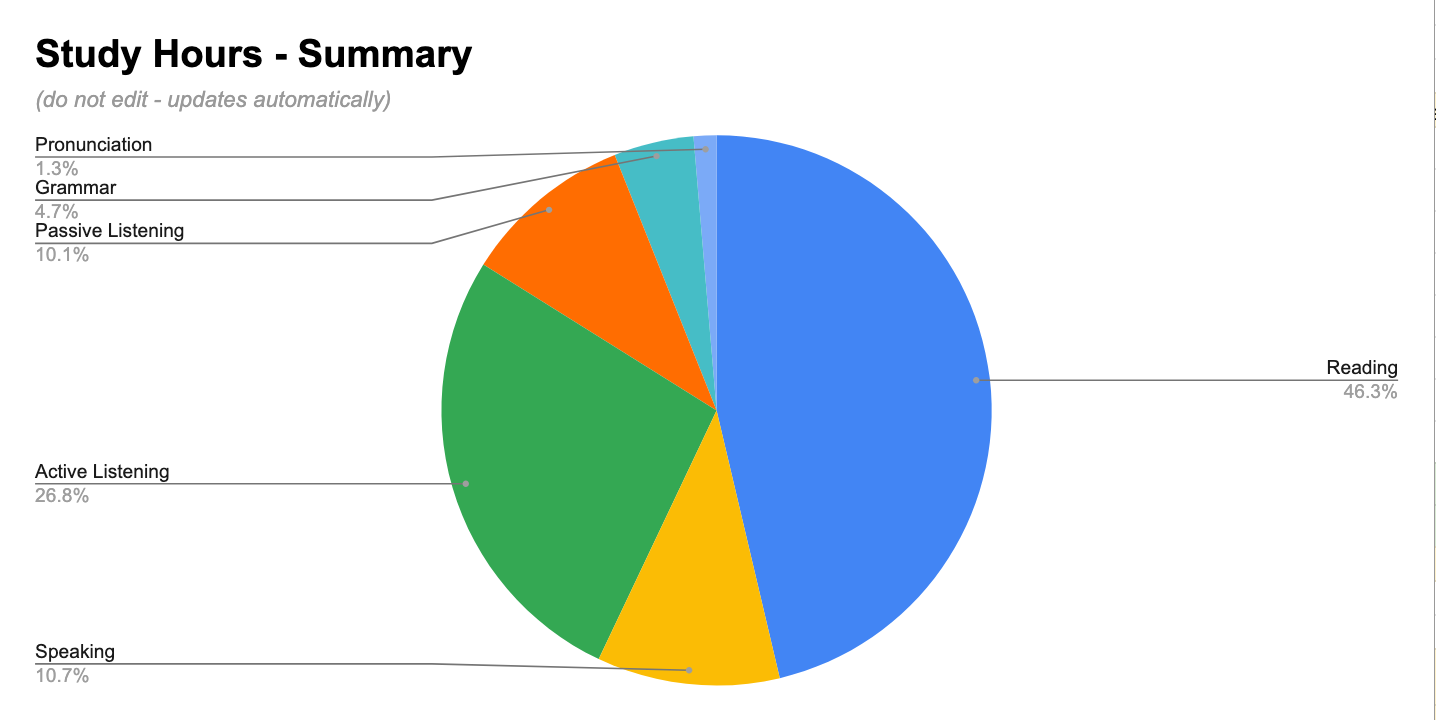
Here’s how this student is spending his study time.
Thanks for reading!
Azren
Calgary Language Nerds owner
https://azrenthelanguagenerd.com