
Fluency as a pathway to personal transformation
More connection, growth, and satisfaction

Watch this video or read the blog post underneath.
If you want to schedule a consultation, fill out this Google Form.
For first-time readers
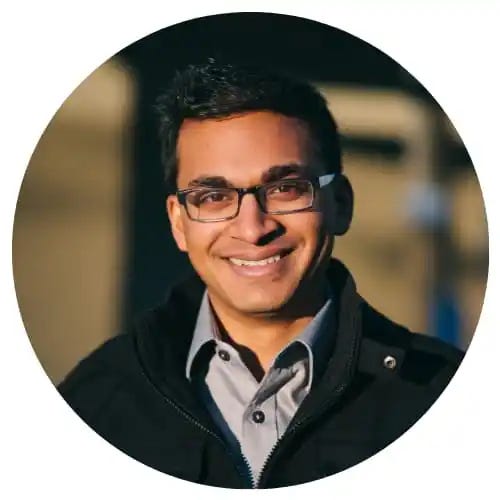
Allow me to briefly introduce myself. My name is Azren. I am a language learning expert and enthusiast. Language acquisition has been the central pillar of my life for over 18 years. I personally speak: English, French, Spanish, Mandarin, and Gujarati. I’m learning Ukrainian now and would like to learn at least 2 more languages.
In 2016, I founded the Calgary Language Nerds.
This was to blend my love of languages and passion for business. I’m fuelled by the difference I can make in people’s lives through language acquisition. I love being a part of that transformational journey toward multilingualism.
My program is called the Guaranteed Fluency Program.
My team and I provide a customized and reliable road to your fluency goals. But that begs the question: what does “fluency” mean? And what does the road to fluency look like? How does my program work?
Let’s begin by 3 ways to define fluency.
Defining fluency descriptively
This is the most common, but arguably the least useful. One example of a descriptive definition of fluency is the CEFR (Common European Framework of Reference), a globally used framework to categorize fluency. It has 6 levels:
A1: Low-beginner
A2: High-beginner
B1: Low-intermediate
B2: High-intermediate
C1: Low-advanced
C2: High-advanced
Defining fluency measurably
When developing the Guaranteed Fluency Program, I was obsessed with defining fluency in measurable terms. I wanted to quantify fluency numerically instead of just describing it with words. Metrics allow me to determine, objectively, which language learning methods result in progress.
Some of the many metrics I look at are:
Speech rate (measured with words per minute)
Grammatical accuracy (measured as a percentage)
Estimated active or passive vocabulary size (measured in word families)
Defining fluency emotionally
To get an emotional definition of fluency, ask yourself this: What would make it so that you, in your own eyes, feel you’ve reached your desired level of fluency?
There are as many ways to answer this question as there are people on this planet. I’ll give you my own emotional definitions for the languages I speak:
When I was learning French, fluency initially meant that I could “trick” native speakers into thinking I was from France. Later, fluency meant that I had an objective high-advanced level as demonstrated by a formal certificate and that I felt confident navigating almost any social situation.
When I was learning Spanish, I wanted to feel as fluent as I did in French. Same for Mandarin, a language I am learning now.
In Ukrainian my desired level of fluency is one where I am confident navigating casual, surface-level conversations and able to maintain friendships. I’d also like to understand the gist of TV shows and podcasts.
In Gujarati, fluency is about feeling like Gujarati is my mother tongue. It technically already is, but I have mental blocks that prevent me from being fully comfortable in my own skin.
Descriptive, measurable, or emotional: which is best?
I do use all three depending on a student’s goals, but after over 18 years I’ve noticed that in general the emotional definition of fluency is what matters most. The goal is for you to feel you’ve reached your desired level of fluency, by your own definition of what fluency means for you on a personal level.
Some people will need an official certificate to feel fluent. Others need to feel confident in order to feel fluent. I talked to someone recently who said fluency to him was being able to understand movies.
Clearly, fluency is personal.
How I charge for my private lessons
I don’t have fixed rates anymore. Every package is fully customized. However, in general I price my services above the top end of the market to account for my one-of-a-kind depth of expertise.
For instance:
Intensive packages: starts at $20,000 per year
Regular packages: starts at $4,000 per year
Pay per month: starts at $400 per month
Language coaching: $250 per half-hour
It is worth pointing out that I occasionally provide reduced pricing if I feel the work would be especially meaningful to a tutor on my team and/or to me personally. Being fulfilled is my north star, both in my personal and professional life. Above all else I care about being excited about each student I teach.
A final note on purpose
For most people, language lies at the heart of a deeper purpose. It could be a yearning to reconnect to one’s heritage, a thirst to develop your mind, a means to inject joy into life, or a tool to dissolve intercultural barriers. It’s so meaningful for me to help language learners plug into that deeper purpose.
Thanks for reading! To schedule a consultation, fill out this Google Form.
Azren
Calgary Language Nerds owner
https://azrenthelanguagenerd.com
Fluency is defined by our writing,reading,listening, speaking levels. Whoever states "I am fluent in xxx" but he/she is not able to read and write is not.